Construction testing
Structural Testing
Measurement of deformation properties of soil layers, aggregates, stabilized soils, geosynthetically reinforced layers, and other structural layers.
Static Load Test
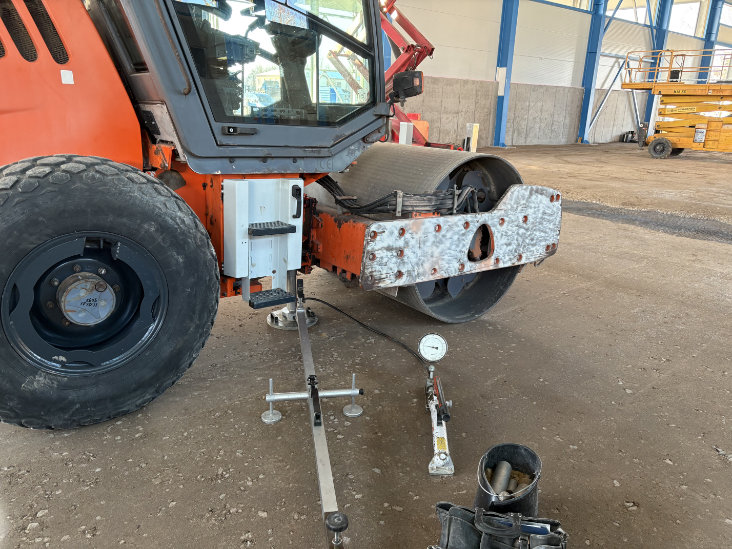
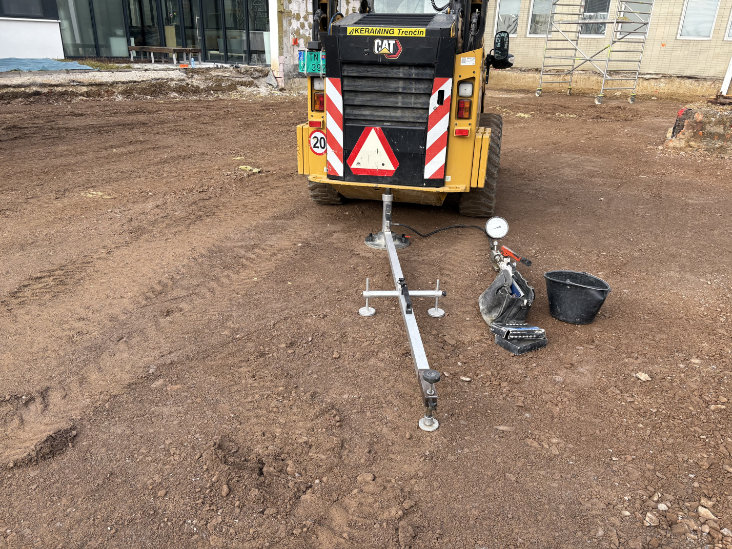
The static load test with a plate according to STN 73 6190:2019 is used to measure the deformation properties of soil layers, aggregates, stabilized soils, geosynthetically reinforced layers, and other structural layers built using compaction and layering technologies.
The measurement principle involves gradually loading the surface of the tested layer using a rigid circular plate, a hydraulic cylinder, and a counterweight, which is created using a construction machine or a vehicle with sufficient weight.
Steel plates of various diameters are used for the test, with different depth ranges of measurement. Our company utilizes plates with diameters of 150 mm, 300 mm, 357 mm, 505 mm, 600 mm, and 762 mm, depending on the purpose of the test and the available counterweight.
Dynamic Load Test
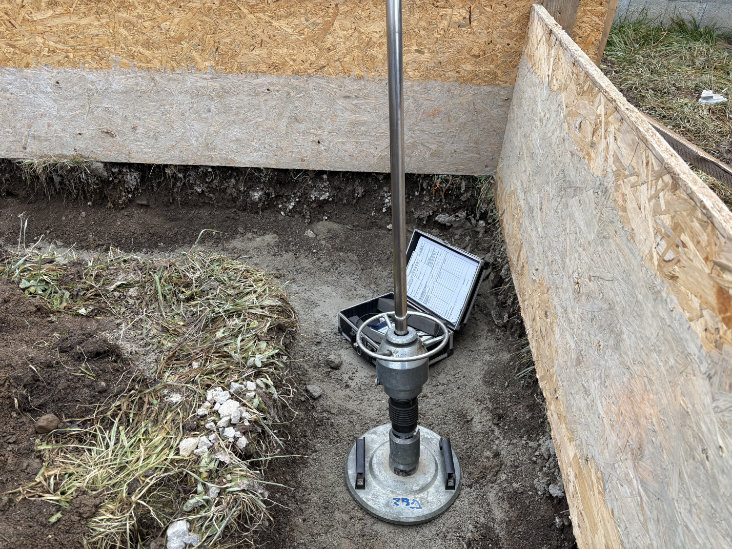
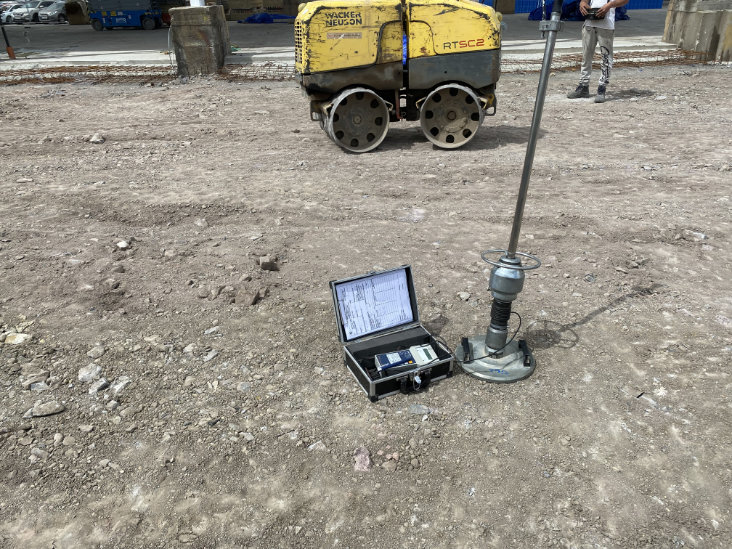
The dynamic load test using a light dynamic plate (also known as an impact load test) according to STN 73 6192:2011 is used to measure the deformation properties of soil layers, aggregates, stabilized soils, geosynthetically reinforced layers, and other structural layers built using compaction and layering technologies.
Unlike the static load test mentioned above, this test uses a standardized circular plate with a diameter of 300 mm, and the loading is performed by a quick impact from the moving weight of the testing device. The plate diameter and the applied contact pressure limit the measurement depth to a maximum of 500 mm.
Supplementary Geotechnical Tests
Supplementary geotechnical tests to determine the physical and mechanical properties of soils, aggregates, and the deformation properties of soil structures, performed during quality control, geotechnical surveys, and diagnostics:
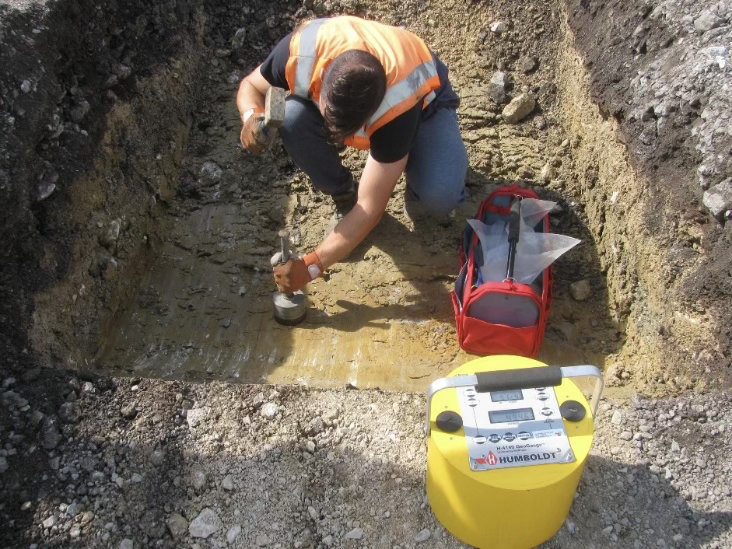
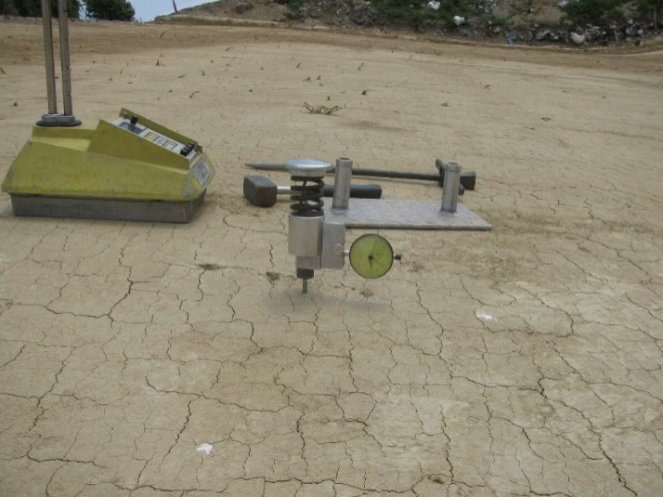
- Measurement of deformation parameters using the Humboldt H-4140 geo-probe (Fig. 5)
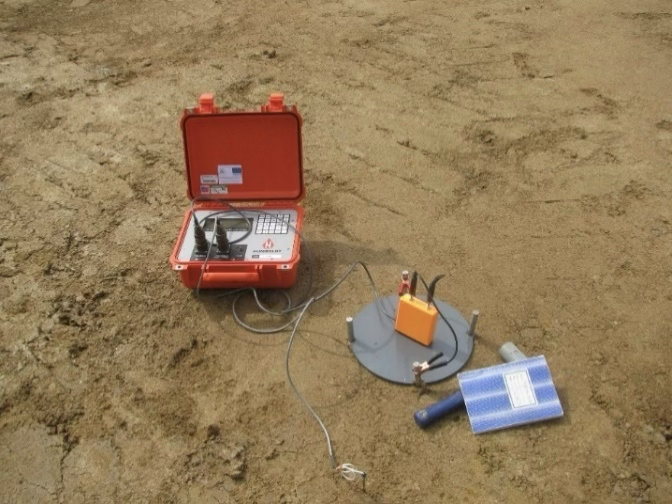
- Measurement of compaction degree, bulk density, and soil moisture using the Humboldt H-4114C electric compaction meter (Fig. 10)
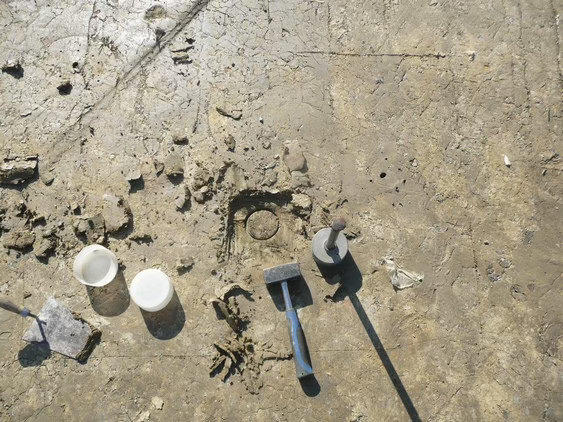
- Measurement of soil bulk density using a cutting cylinder (Fig. 5, 6)
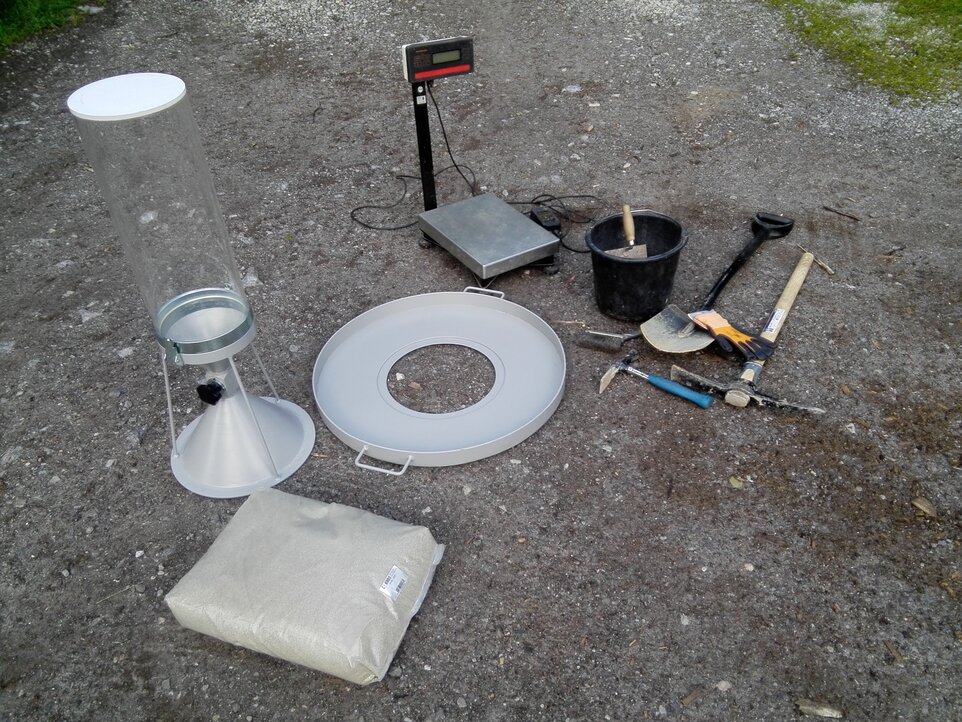
- Measurement of soil bulk density using a sand volumeter (Fig. 9)
- Direct measurement of soil moisture by drying in a hot-air oven
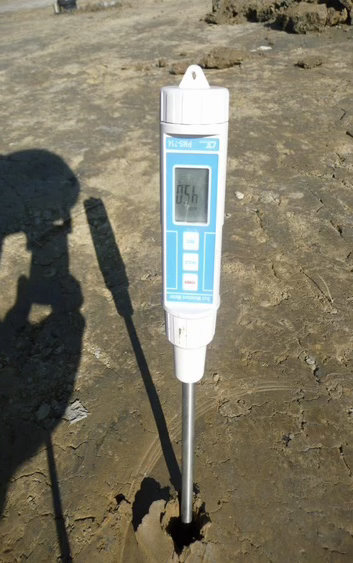
- Measurement of soil moisture using an electronic moisture meter (Fig. 7)
- Measurement of soil physical-mechanical parameters using a vane shear test
- Measurement of soil penetration resistance using a light dynamic penetrometer (Fig. 8)
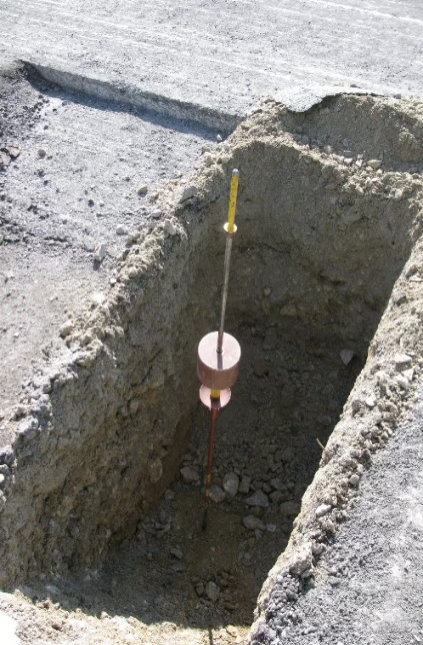
- Measurement of soil penetration resistance with derivation of soil physical-mechanical parameters using a light static penetrometer and Proctor needle (Fig. 11)
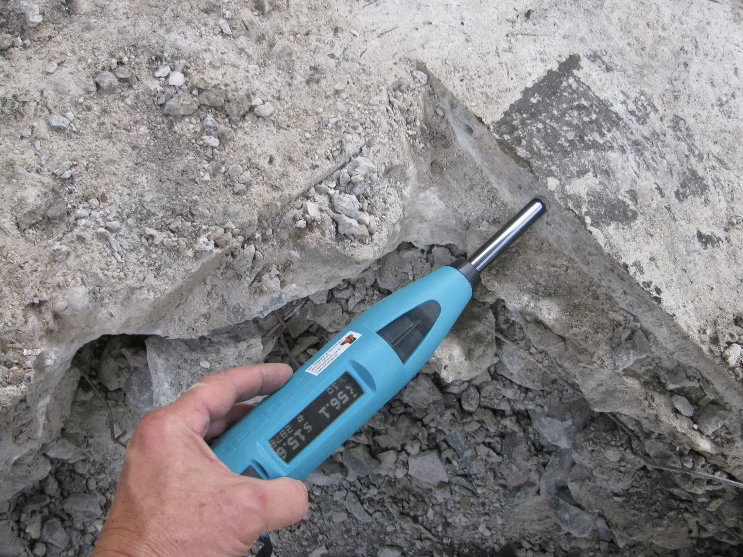
- Non-destructive concrete strength measurement using a Schmidt hammer (Fig. 12)